The sealed system is the part people fear most and the part that fails least. The compressor pumps refrigerant vapor into the condenser, where heat leaves the cabinet; the liquid then passes through a capillary tube and boils off inside the evaporator, pulling heat out of the air blown across it. When this loop genuinely fails, the cause is usually a leak at a joint or in the evaporator, a restriction, or a compressor that no longer starts or pumps. Far more often, what looks like a dead compressor turns out to be a failed start relay, a stalled condenser fan or a control board that never sends power. That is why the compressor is condemned last, only after its supporting parts have been measured.
Most modern refrigerators have a single evaporator hidden behind the freezer’s back panel. A fan pulls air across it and pushes part of that cold air into the fresh-food side through a duct and a damper. If the fan motor seizes, the damper sticks or the duct ices over, the freezer can stay cold while the fresh-food section drifts into the 50s. Frost is the usual culprit. On a regular schedule, set by a timer or an adaptive control, a defrost heater warms the coil, a thermostat or sensor ends the cycle, and meltwater runs down a drain to a pan over the compressor. A burned-out heater, an open defrost thermostat or a frozen drain lets ice pile up until it chokes the airflow completely.
Controls decide everything else. Older units use a mechanical cold control and a defrost timer; most current models rely on thermistors and a main board that switches the compressor, fans and heater through relays. A thermistor that drifts out of range can make the board believe the box is warm when it isn’t, or the reverse. Variable-speed compressors add an inverter board that converts line power into the drive signal the compressor needs. Boards do fail from heat, age and power disturbances, but they get blamed far more often than they deserve, so the inputs and outputs are checked before anyone recommends a new one.
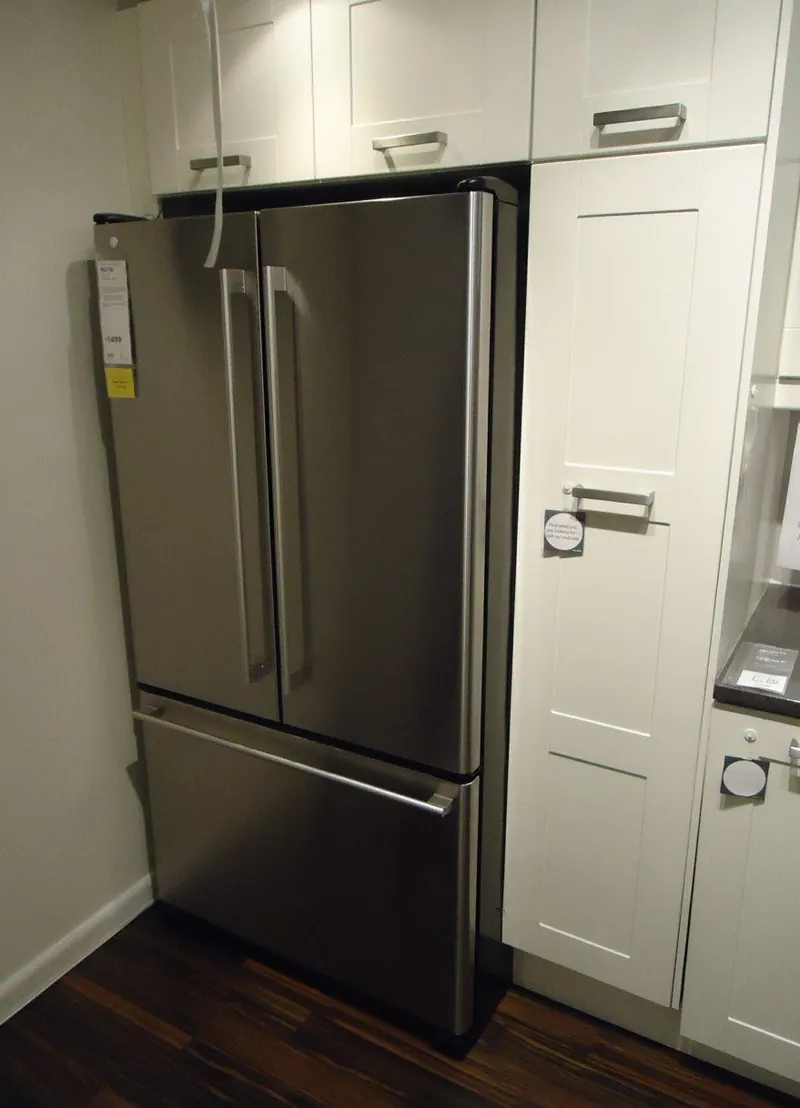
Then there are the parts that touch water and people. The water inlet valve, filter head, supply tubing and ice maker account for a large share of service calls, from slow dispensers to puddles on the floor. Door gaskets tear or flatten, hinges sag under heavy French-door panels, and door switches fail so lights stay on or fans never stop. Each of these can masquerade as a cooling problem: a gasket leak lets humid air in, frost builds faster, and the defrost system falls behind. Top-freezer, bottom-freezer, side-by-side and French-door designs share all of these systems but arrange them differently, which changes how hard each part is to reach.