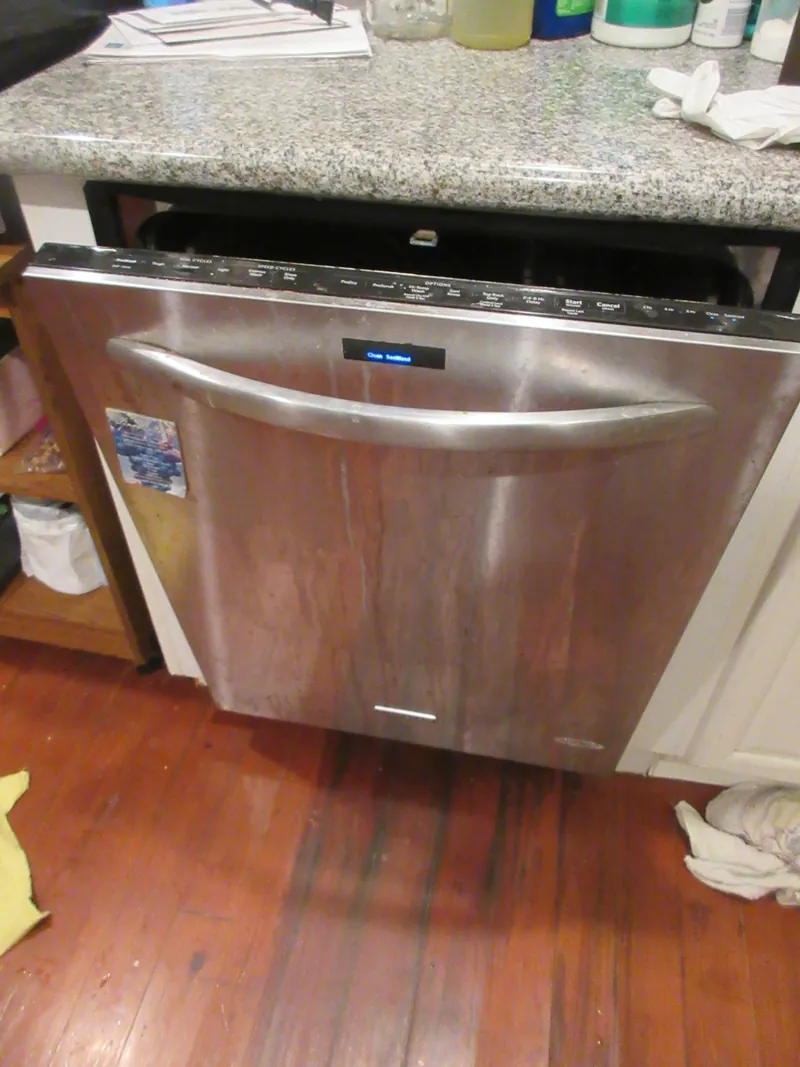
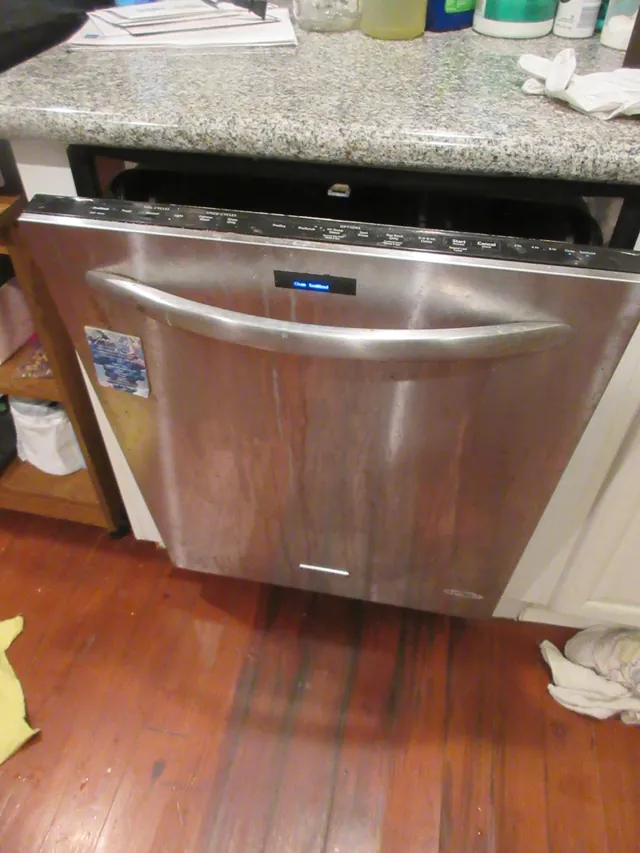
Dishwashers are the KitchenAid appliance we see most. Built on the Whirlpool platform, they use a stainless tub, a third rack on many models, and on current units a two-piece filter the owner removes and rinses. Older machines from before the move to manual filters used a hard-food disposer that chopped debris and sent it down the drain. Frequent faults include drain and wash motor problems, a heating element or its relay that stops heating, door latch failures, and leaks at the door or under the tub. When something goes wrong the panel often blinks an indicator in a set pattern, which the technician confirms in the service diagnostic cycle.
KitchenAid refrigerators span French-door, side-by-side and built-in styles, many with an ice maker in the fresh-food compartment or the door. Those ice makers are the busiest source of calls: a frozen fill tube, a failed inlet valve, an auger motor that hums without dispensing, or cubes that fuse into a block because the compartment runs warm. Behind the freezer panel, the defrost system, meaning the heater, the thermostat or sensor and the control that schedules defrost, produces the classic pattern of a frosted back wall and a refrigerator that slowly warms. Evaporator and condenser fans come next, and a fan that turns noisy is often the early warning.
KitchenAid ranges and cooktops come in gas, electric, induction and dual-fuel versions, including commercial-style models with heavy grates and bold knobs. Gas oven complaints usually trace to the igniter. A hot-surface igniter can glow yet no longer draw enough current to open the oven gas valve, so preheating drags on or the oven never lights at all. Surface burners stop sparking because of a wet or cracked electrode or a failed spark module. Electric ovens lose bake or broil elements, and both fuel types drift in temperature as the oven sensor ages. Wall ovens, including combination microwave and oven units, add a cooling fan and a door lock mechanism to the list.
Across the lineup, the control boards are shared with or closely related to Whirlpool-family boards, and they fail for the same reasons: heat, age and power disturbances. A board that stops driving one output, whether a heater, a fan or a valve, can look exactly like a failed component, which is why voltage is measured at the part before either one is blamed. Many KitchenAid models include a service mode that reads stored codes and runs each load on command. Using it shortens the visit and avoids replacing a good part just to see whether the problem goes away.
Reading a KitchenAid label is simple once you know where to look. Model numbers begin with K, and the letters that follow identify the product family, such as KD for dishwashers, KR for refrigerators, and KS or KF for slide-in and freestanding ranges. The serial number encodes where and when the unit was built, which matters when a part changed during production. Dishwasher labels sit on the tub rim or door edge, refrigerator labels on an inside wall of the fresh-food section, and range labels on the frame behind the storage drawer or oven door. A clear photo of that label is the fastest route to the right part.