In the United States, Hotpoint is a value brand of GE Appliances, a Haier company since 2016. It is not the Hotpoint sold in Britain and Europe, which belongs to a different manufacturer, so overseas manuals and parts listings do not apply to a unit bought here. A US Hotpoint is essentially a GE design with the extras stripped out: a mechanical dial where a GE might carry a touchpad, a coil element where a step-up model has glass, a top-loader with fewer cycles. Because it rides on GE platforms, its model tag leads straight into the GE parts catalog, and most failures already have a widely stocked replacement.
Most Hotpoint refrigerators we open are top-freezers. All the cold is produced in the freezer and pushed down into the fresh-food section through an air damper, so trouble upstream shows up as a warm lower compartment first. The usual causes are frost choking the evaporator after a defrost heater, defrost thermostat or defrost timer quits, a seized evaporator fan, or a stopped condenser fan under the cabinet that lets the compressor run hot. A click from the back every few minutes while the compressor never starts points to the start relay or overload. Many of these models leave the factory ice-maker ready, and a kit added later brings its own water valve to check.
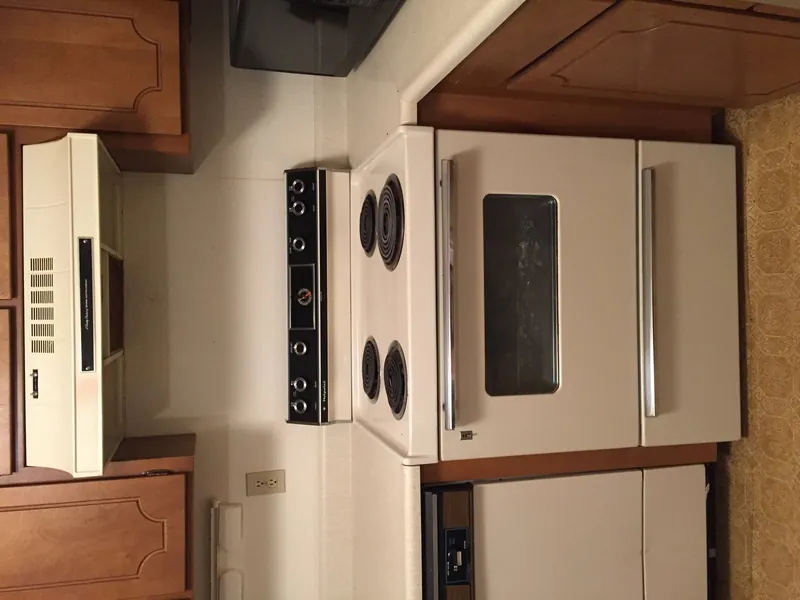
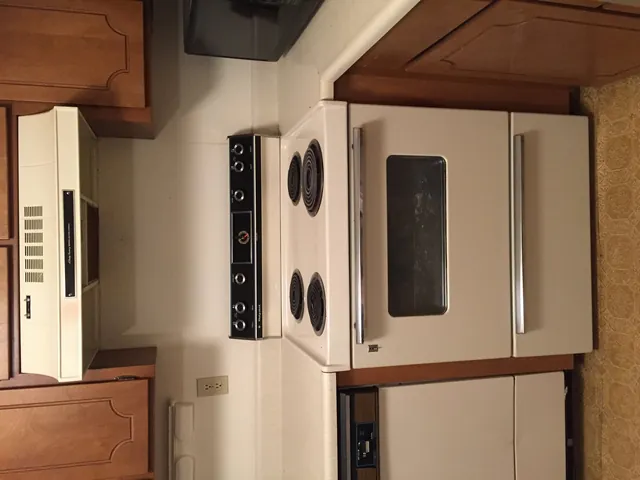
Ranges are where Hotpoint differs most from its siblings, because so many still use plug-in coil elements. The coil terminals push into a ceramic receptacle, and once that grip loosens, the connection arcs, overheats and scorches the block, so the burner works only when wiggled or not at all. Fitting a new element into a burned receptacle just ruins the new element, so both get replaced. Each surface unit is governed by an infinite switch that cycles power on and off, and a worn one leaves a burner stuck on high or barely warm. Smooth-top versions put radiant elements under glass with similar switches. In the oven, bake and broil elements, the temperature sensor and the gas glow-bar igniter cover most calls.
Hotpoint washers are top-loaders, and many newer ones share GE’s drive platform, so the trouble list overlaps: a lid lock that will not engage, a drain pump jammed by a sock, a suspension that lets the tub bang during spin, and on some models the shifter that switches between wash and spin. Older belt-drive Hotpoint machines wear out the belt and clutch instead. Hotpoint dryers stay basic. A drum that turns but stays cold on an electric model usually means a heating element, thermal fuse or high-limit thermostat; on a gas model, an igniter or valve coil. Squeals and thumps come from the idler pulley and the drum glides or rollers, and a snapped belt leaves the drum still.
Hotpoint dishwashers are basic built-ins, usually with front controls and a plastic tub, and their weak points are easy to list: the drain pump and its check valve, the water inlet valve behind the lower panel, the door latch switch, and the heating element with its high-limit protector. With lighter insulation and simple drying, a load that comes out damp can be normal rather than a fault, and we will say so instead of selling a part. Older dial-controlled units can stall on one step when the timer contacts burn. Whatever the appliance, the model tag comes first, because GE revises Hotpoint parts often and the right revision depends on the build date.