Every cycle starts with fill. The control board energizes the water inlet valve, a solenoid valve mounted low on one side behind the kick panel, and hot water from the supply line under the sink flows into the tub. Some models time the fill; others count flow with a meter or read a pressure sensor. A float in the tub floor rides up on a switch that cuts the valve if the level climbs too high. Fill trouble shows up as a tub that stays dry, a slow trickle, or water that keeps coming. The usual culprits are a clogged inlet screen, a burned valve coil, a float stuck in the raised position, or a board that never sends voltage to the valve.
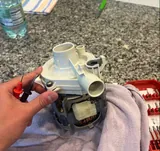
Once the sump holds enough water, the circulation pump, driven by the wash motor, pushes it up through the lower spray arm, a supply tube to the middle arm and, on many units, a spray head at the ceiling. Water falls back through the filter assembly into the sump and goes around again. Newer dishwashers rely on a removable cylindrical filter that the owner rinses; many older ones used a hard-food chopper blade and self-cleaning screens. A clogged filter, a split spray-arm hub, a diverter that never switches between arms or a worn pump impeller all produce the same complaint: dishes come out dirty while the machine still sounds busy.
Draining is handled by a separate drain pump on most current designs, though some older machines used a single reversing motor or a solenoid-operated drain valve. The pump pushes water past a check valve, which keeps dirty water from flowing back, then up the drain hose to a countertop air gap or a high loop under the counter, and finally into the garbage disposal or a sink tailpiece. Any point along that path can block. Glass shards and fruit pits jam the impeller, a hose crushed during installation restricts flow, and a disposal installed without its dishwasher knockout plug punched out will never accept water at all.
Heat does two jobs: it brings the wash water up to the temperature detergent enzymes need, and in many American designs it dries the load at the end. A tubular heating element under the tub floor is common; Bosch and several European-style designs build a flow-through heater into the circulation pump and rely on condensation plus rinse aid for drying. A thermistor reports water temperature to the board, and a hi-limit thermostat or thermal fuse cuts power if something overheats. An element that has opened, a thermistor that reads wrong or a board relay that no longer closes gives lukewarm washes, long cycles, wet dishes and sometimes a fault code.
The door and the controls tie everything together. A latch assembly holds the door shut and carries one or two switches that tell the board it is safe to run; if those switches stay open, most machines beep, flash a light or do nothing. Touchpads on the door top or front send commands to the control board, and a wiring harness bends through the hinge every time the door opens. Underneath, many dishwashers sit in a plastic base pan with a float switch that detects leaks and stops the fill. A latch with a cracked striker, a membrane touchpad that no longer registers, a harness worn through at the hinge or a tripped leak float are all routine repairs.