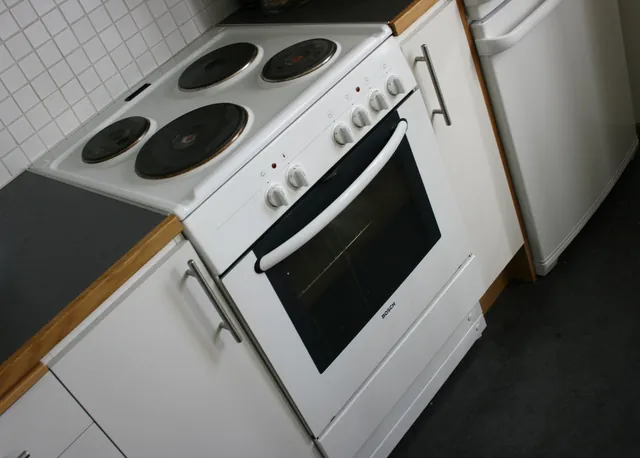
On an electric range or wall oven, heat comes from two or three resistance elements: a bake element on the floor of the cavity, sometimes hidden under a smooth enamel panel, a broil element across the top, and on true convection models a third element wrapped around a fan in the back wall. They run on 240 volts and fail in a predictable way. The metal sheath blisters or splits, the wire inside opens, and that element simply stops heating while the display, light and fan carry on as usual. A hidden bake element fails out of sight, so the only clue is a long preheat, with the broil element doing most of the work. The terminals where each element meets its wiring also oxidize and scorch, which is why the connectors get inspected along with the element.
Most gas ovens built in recent decades light with a hot-surface igniter, usually called a glow bar, wired in series with a gas safety valve. A bimetal strip inside that valve holds it shut until enough current flows through the igniter circuit. As the igniter ages, its resistance climbs. It still glows bright orange, but it no longer passes the current the valve needs, so the oven lights after a long delay or never lights at all. That is the most frequent gas oven complaint we see, and it is why the technician reads igniter current with a clamp meter instead of judging by the glow. Safety valves themselves fail far less often, and a minority of ovens use spark ignition with flame sensing instead of a glow bar.
Temperature is managed by an electronic control reading a sensor probe that sticks into the cavity, usually near a top rear corner. The probe is a resistance sensor whose reading rises as the oven warms, and the control switches the bake and broil circuits through relays to hold the set point. When the probe drifts, the oven bakes hot or cold. When it opens or shorts, most controls post an error and shut the heat off. Relays can burn their contacts, giving no heat, or weld closed, giving heat that won’t stop. Control boards also take damage from voltage spikes when power returns after an outage, and from years of heat rising into the control panel above the oven.
Self-clean is hard on a range. The cycle pushes the cavity far past any baking temperature, and that heat finds weak spots: a thermal fuse that opens and leaves the oven dead, a motorized door latch that won’t release, a control board that picks the week before a holiday to quit. The latch has a small motor and switches that report its position to the control; if either fails, the door can stay locked with the oven stone cold. Convection fan motors wear their bearings and start to grind or stall. Hinges bend when someone leans on an open door, and a flattened or torn gasket lets heat pour out along the top edge, which shows up as uneven baking rather than an obvious breakdown.