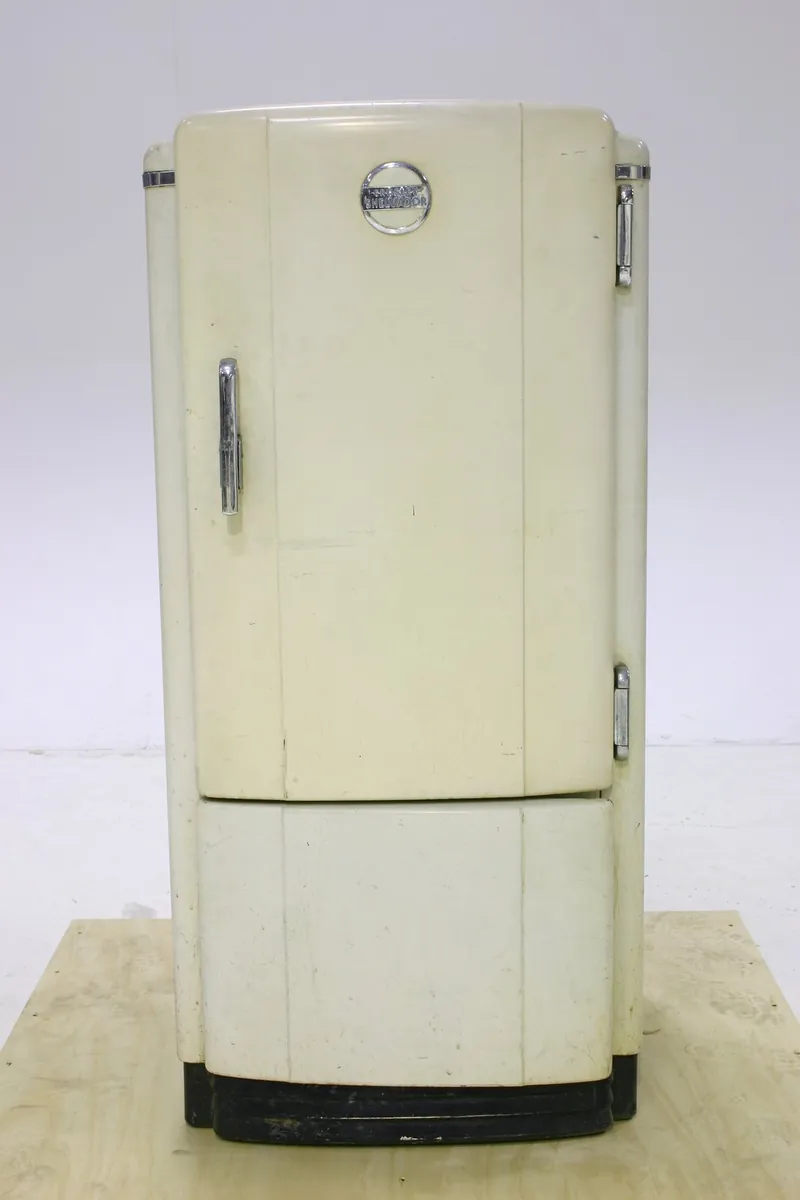
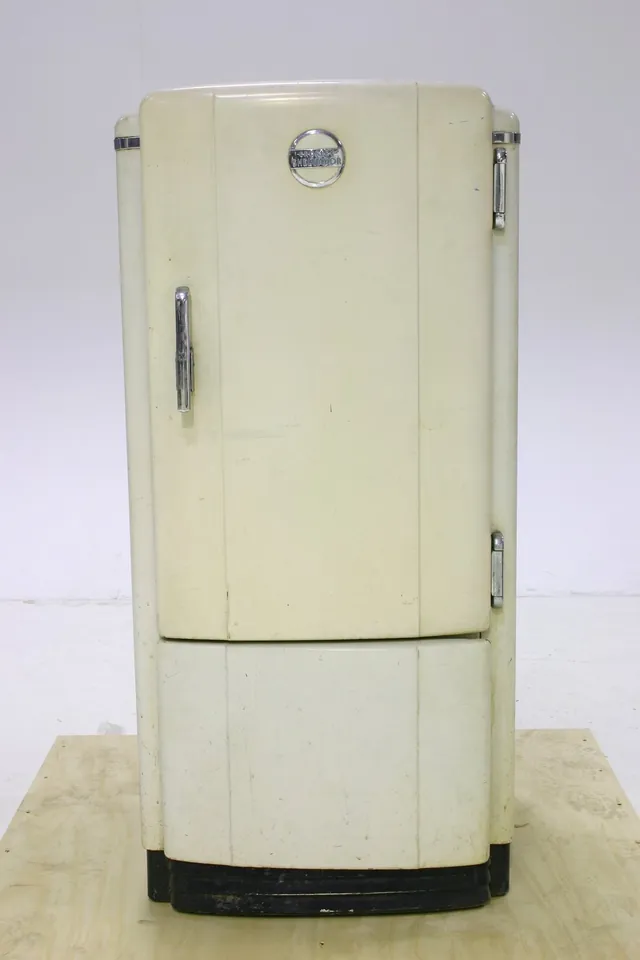
The Crosley name goes back to a Cincinnati company that sold radios, small cars and, in the 1930s, the Shelvador, one of the first refrigerators with shelves built into the door. Today the name appears on appliances sold through independent dealers, often with delivery and hookup arranged by the store. The appliances themselves are built by established manufacturers and carry the Crosley badge. That arrangement is not unusual in the industry, but it means the badge tells a technician very little. A Crosley washer and a Crosley refrigerator bought together may share nothing inside, and a Crosley model bought ten years ago may differ completely from one bought last year in the same category.
Identification starts with the tag. The model number on a Crosley rarely names the builder outright, but the rest of the tag usually gives it away: the structure of the number, the serial format, the layout of the rating plate. Opening an access panel often settles any doubt, because a pump, control board or ice maker carries the maker’s own part number, and that number is what we order by. This matters because diagnosis follows the builder’s logic. Fault codes, the way into service mode, the order of tests and even which sensor values count as normal all come from the underlying platform, not from the name across the front.
Crosley laundry follows the same rule. Depending on the model, a Crosley top-load washer may be a close sibling of a mainstream American top-loader, with a lid lock, a drain pump and either a gearcase or a motor under the tub, while a front-loader may come from a different builder entirely, with its own drive and door-lock design. Dryers are the most uniform: whatever the source, they wear drum rollers or glides, belts and idler pulleys, and they lose heat through a thermal fuse, element or gas igniter. The symptoms owners describe, such as no spin, banging or no heat, point to the same few systems, but which parts fit depends entirely on the platform.
Refrigerators and freezers are where the platform question matters most. Top-freezer, side-by-side and French-door designs from different builders defrost on different schedules, place their evaporator fans and temperature sensors differently, and run their ice makers on different modules and water valves. The failures themselves are familiar: a defrost heater or sensor that lets frost choke the coil, an evaporator fan that slows, a condenser fan that quits in summer heat, a compressor start device that clicks without starting. A freezer in a garage adds the strain of both temperature extremes. We confirm the design before testing so that every reading is judged against the right specifications.
In the kitchen, Crosley ranges, dishwashers and over-the-range microwaves follow their builders as well. Electric ranges, coil or smooth-top, fail at surface elements, switches, bake and broil elements and the oven sensor; gas ranges at igniters, spark modules and valves. Dishwashers stop draining because of a clogged filter or failed pump, leave dishes dirty when a wash motor or spray arm falters, and stop filling when an inlet valve or float switch fails. None of that is unusual. What takes care is matching the replacement: two Crosley dishwashers that look alike from the front can take different pumps, so every part is checked against the full model and serial number before it goes in.