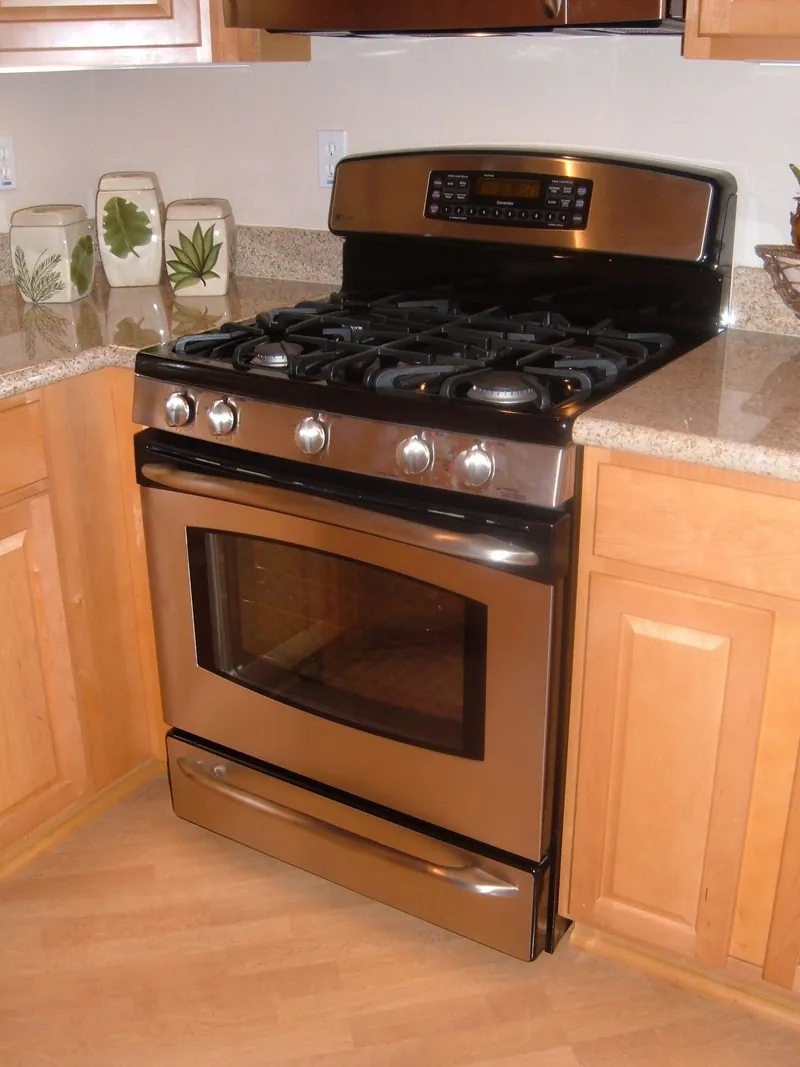
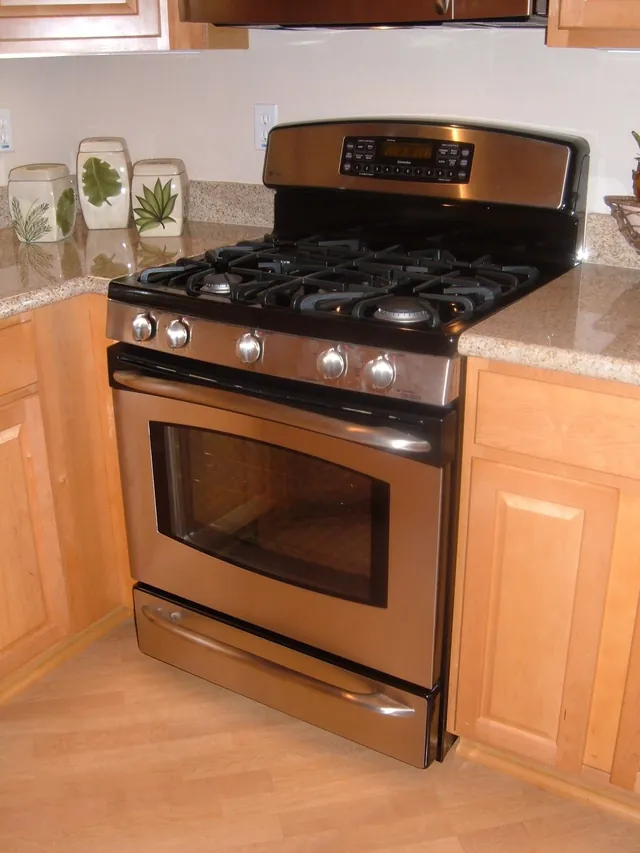
A Profile is built on the same chassis families as the standard GE line, with more electronics laid over them. A Profile range might share its oven cavity and bake element with a plain GE model while carrying a different control board, a convection system, a probe jack and a Wi-Fi module. In practice, a Profile fault is less often a single worn part and more often a question of which component is telling the control what. A board that receives a bad sensor reading will switch a heater off on purpose, and replacing the heater does nothing because the reading, not the heater, is the problem. That is why testing comes before any part.
Profile ranges and wall ovens add a convection fan, on many models a third heating element ringed around it, and modes such as no-preheat air fry that depend on accurate temperature feedback. The oven sensor is a resistance probe, and on many GE-built electronic ovens it reports as F3 or F4 when it reads open or shorted; a sensor that has only drifted causes uneven baking with no code at all. A stuck or failing key on the touch panel commonly shows as F7. Self-clean is the other trap. That long, very hot cycle is when door lock motors, thermal fuses and control relays most often give up, which is why ovens tend to quit the week before a holiday.
Profile induction ranges and cooktops are a category of their own. Beneath the glass, copper coils are driven by power boards that switch heavy current, and those boards are cooled by a fan pulling air through a vent; a blocked intake or a sluggish fan lets them overheat and drop a zone. When a zone will not start, we first rule out simple causes: cookware that is not magnetic, a pan much smaller than the ring, a control lock left on. Only then do we measure the board outputs and the coil. Induction boards are costly, and condemning one on symptoms alone is a mistake we take care not to make.
Profile French-door and side-by-side refrigerators rely on several thermistors, in the fresh-food section, the freezer, on the evaporator and near the ice maker, and the main board makes every decision from them. Many run a variable-speed compressor driven by an inverter board, so a unit that seems not to cool may have a perfectly healthy compressor that never received the command. We read the sensor values against measured temperatures, check inverter output and fan speeds, and look for a defrost fault before anyone mentions the sealed system. Door ice and water, and on some models an auto-fill pitcher, add valves and heaters, each testable on its own.
Profile dishwashers tuck their controls along the top of the door and add bottle-wash jets and a drying fan, so the touchpad, the harness running through the door hinge and the fan motor join the usual pump and inlet valve on the checklist. Profile washers and dryers bring larger displays, steam on some dryers, bulk detergent tanks on some washers and app connectivity, and newer homes may have the UltraFast Combo, a ventless machine that washes and then dries with a heat pump. That unit behaves differently from a vented pair: long dry cycles and condensate handling are normal, and its lint filters need regular attention. Parts for the newest models can take longer.