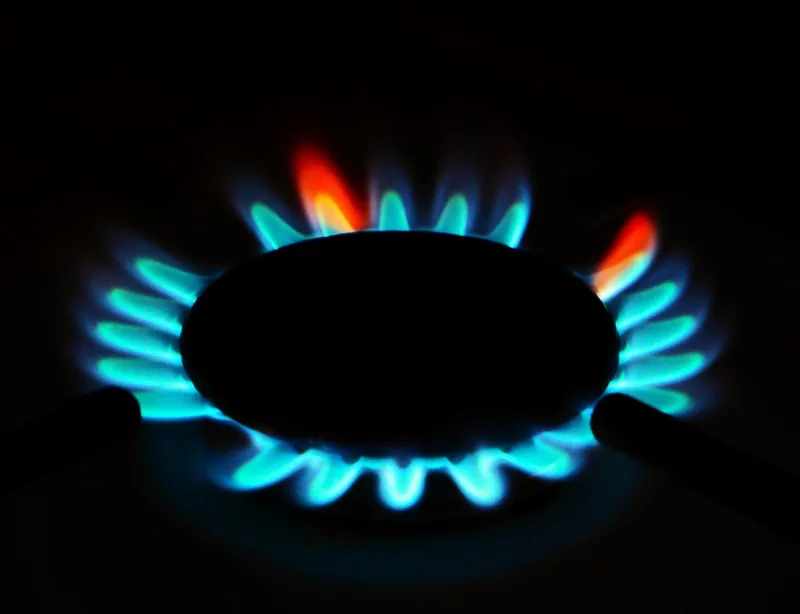
Burner parts come first. Sealed burners have a removable cap resting on a slotted head, and the cap must sit perfectly flat for gas to reach the electrode evenly. After cleaning, caps often go back slightly off center or onto the wrong burner, since the sizes look alike. Boil-overs are the other big cause: water, sauce or cleaner fills the ports near the electrode, and the burner clicks without catching until everything dries. With the burner cold, lift off the cap, and the head if yours comes off, rinse away residue, clear clogged ports with a straightened paper clip rather than a toothpick that can snap off inside, and let the parts dry completely, overnight if needed. Put them back and try again before calling anyone.
Next is the spark itself. Turn the knob to LITE in a dim kitchen and watch the electrode: a crisp blue spark jumping to the burner is what you want. A weak orange spark, a spark jumping somewhere else, or no spark at that burner while the others click points to a cracked or dirty ceramic electrode or a damaged lead wire under the cooktop. If no burner clicks at all, make sure the range or cooktop is plugged in and the outlet has power, since spark ignition runs on household current; after that, the spark module or its wiring is the suspect. If the igniters click nonstop, even with every knob off, a valve switch is wet or has failed.
Gas supply is the third layer. If none of the burners light even with a good spark, confirm the shutoff valve behind the range is open, with the handle in line with the pipe, and that your other gas appliances are working. After a move, a remodel or PG&E work at the meter, that valve is often simply closed. If one burner has no gas or only a tiny flame, its orifice may be plugged with debris or its valve may be failing. Small, weak flames on every burner point to a pressure regulator problem or to orifices sized for propane on a natural-gas line. Tall, yellow, sooty flames can mean the opposite mismatch, which is unsafe and needs correcting before the cooktop is used again.
A few setups add their own quirks. Some vintage ranges still found in older homes use standing pilots instead of spark ignition; a pilot that has gone out needs relighting as the manual describes, and one that keeps going out needs its pilot orifice cleaned or adjusted. Some cooktops have automatic reignition, sparking until the electrode senses flame and relighting a burner that blows out. On those, clicking that continues with the flame on usually means the flame isn’t touching the electrode, often because the cap is off center. Unlike an electric burner, a gas burner has no element to burn out, so nearly every failure comes down to ignition, gas flow or air.